Cardiology · Inpatient blood pressure
Is IV blood pressure control associated with worse inpatient outcomes?
What recent observational studies and acute-care guidance say about treating severe inpatient hypertension without acute target-organ effects.
Clinical takeaway
Treat the emergency, not the number.
These studies add to the growing consensus against giving IV antihypertensive agents to inpatients who do not have acute hypertension-related end-organ effects—even when blood pressure is severely elevated.
The available studies are observational and describe associations. Further research is needed to identify whether particular patient subgroups benefit from IV therapy.
Guidance
Acute-care blood pressure management
Sample of recent studies
What the cohorts found
Clinical Outcomes of Intensive Inpatient Blood Pressure Management in Hospitalized Older Adults. JAMA Intern Med. 2023;183(7):715–723.
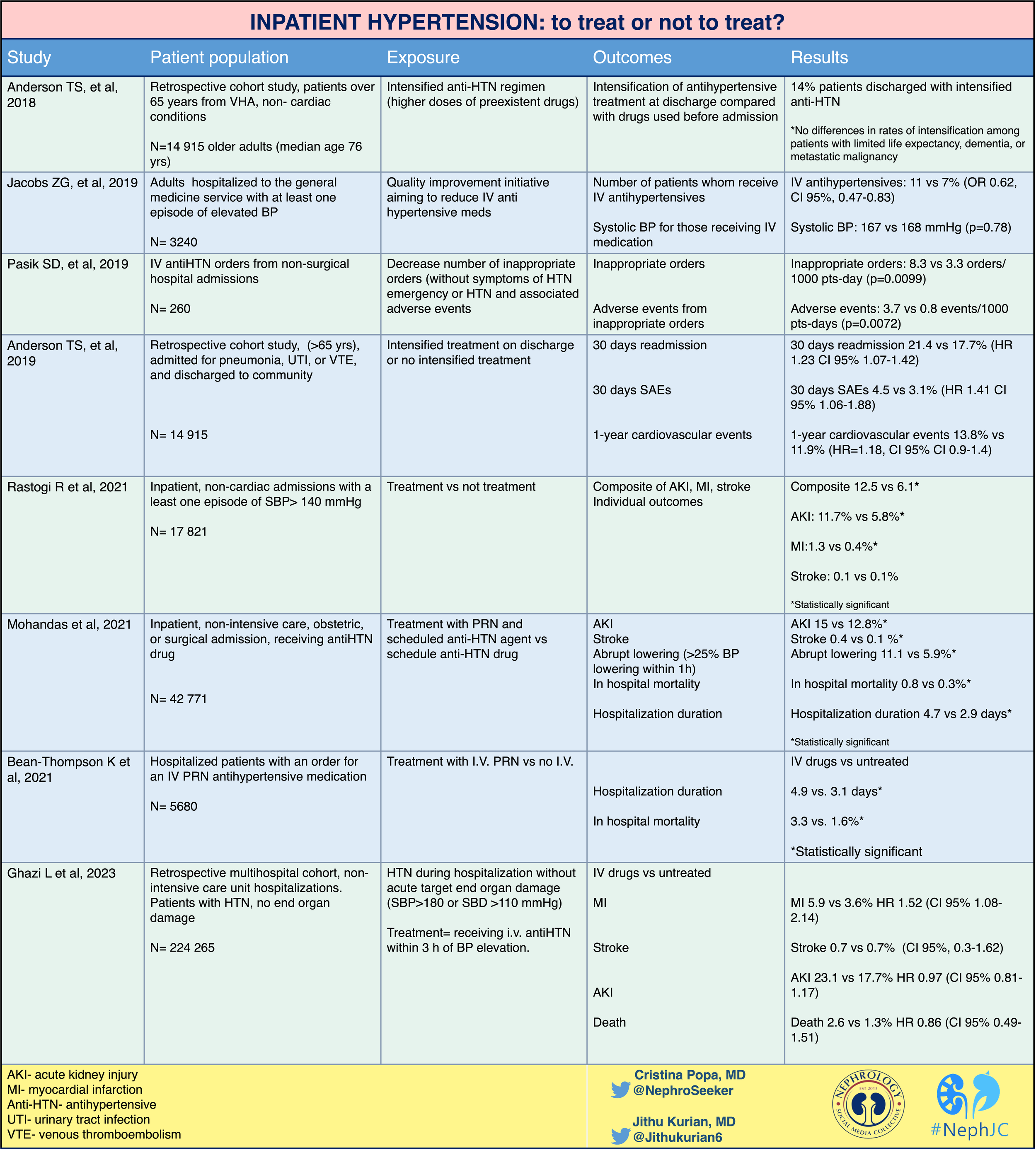
In a cohort of 66,140 older adults hospitalized for noncardiac conditions, intensive inpatient antihypertensive treatment was associated with a greater risk of adverse events. Risks were greater among patients receiving intravenous antihypertensives.
Read the study ↗Treatment and Outcomes of Inpatient Hypertension Among Adults With Noncardiac Admissions. JAMA Intern Med. 2021;181(3):345–352.
In a cohort of 22,834 adults, oral and intravenous inpatient hypertension treatment was associated with higher rates of subsequent acute kidney and myocardial injury. No blood pressure interval was associated with better outcomes after treatment, and discharge medication intensification was not associated with improved blood pressure control.
Read the study ↗Effect of intravenous antihypertensives on outcomes of severe hypertension in hospitalized patients without acute target organ damage. J Hypertens. 2023;41(2):288–294.
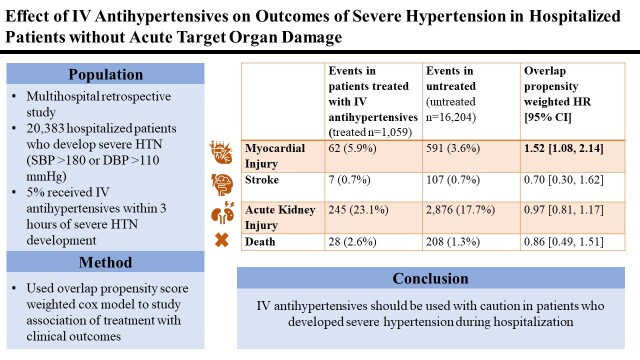
Among 224,265 non-ICU hospitalizations, 20,383 developed severe hypertension. In the weighted analysis, patients receiving IV antihypertensives were more likely to develop myocardial injury: 5.9% versus 3.6% (HR 1.6; 95% CI, 1.13–2.24). Treatment was not associated with increased stroke, acute kidney injury, or death.
Read the study ↗Visual summary
IV antihypertensive outcomes
Click the figure once to view it full screen.
 View full screen ↗
Overview of research
The evidence at a glance
Click the figure once to view it full screen.
 View full screen ↗
Other sources